
Overview
Properties by design, not by discovery.
A material's response to electromagnetic radiation is ordinarily fixed by its chemistry. Metamaterials break that constraint. By structuring a medium at a scale finer than the wavelength it must handle, one can engineer a bulk response — refraction, absorption, dispersion — that no naturally occurring substance exhibits.
Program RP-031 designs and fabricates these structures. The work sits at the intersection of electromagnetic theory, precision fabrication, and patient measurement, and it is concerned less with exotic demonstrations than with media that are manufacturable, repeatable, and useful at the frequencies that matter.
Negative Index
Bending light the wrong way.
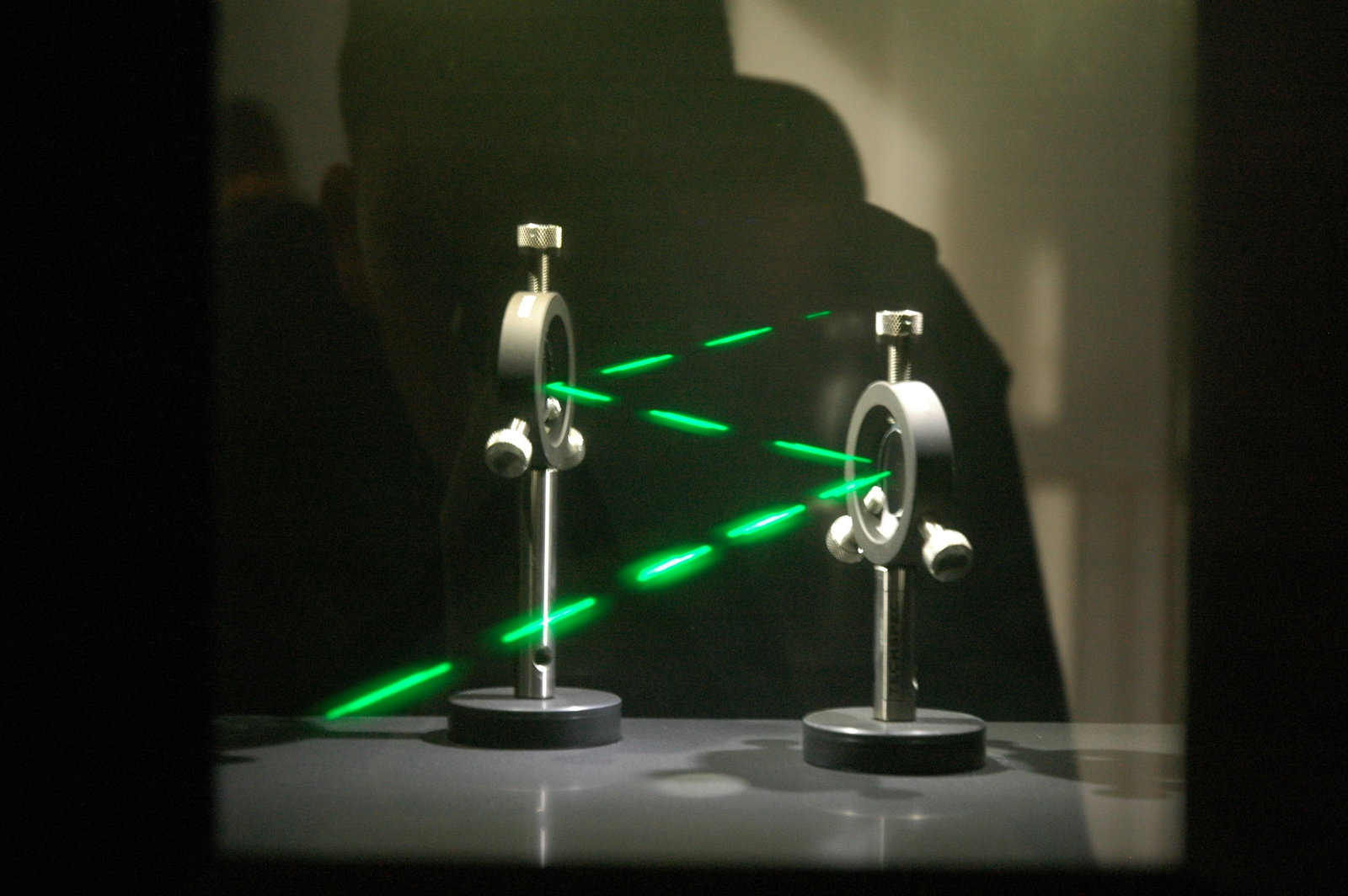
Among the most counterintuitive results in the field is the negative-index composite — a medium in which the phase of a wave advances in the direction opposite to its energy flow. Such media refract radiation toward the same side of the normal as the incident beam, an effect with no analogue in conventional optics.
The program fabricates negative-index composites for the microwave band and characterizes them in a dedicated anechoic chamber. The challenge is rarely the underlying physics; it is achieving the structural tolerances, across a usefully broad bandwidth, that the theory quietly assumes.
Cloaking
On the modest reality of invisibility.
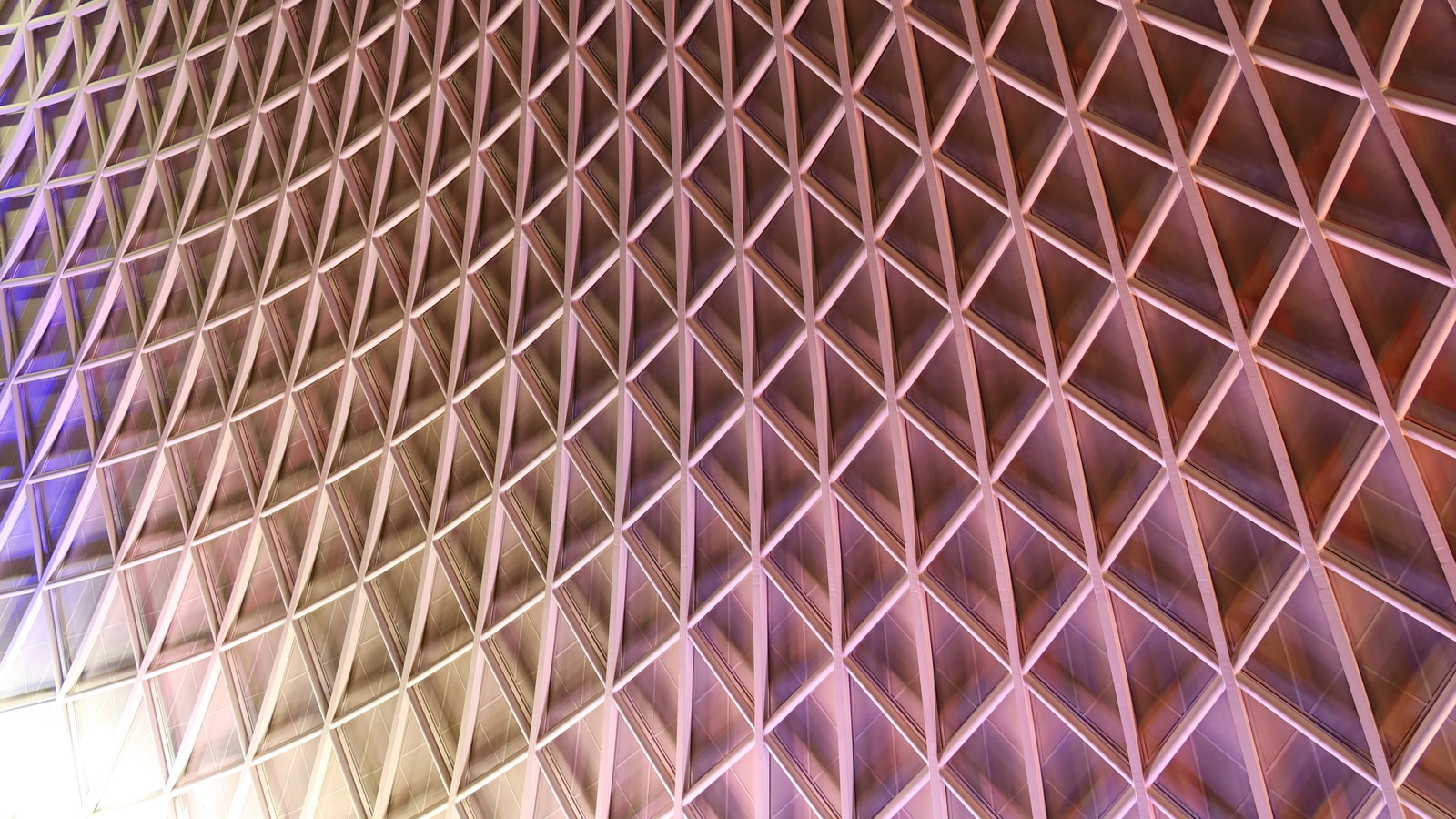
Popular accounts of cloaking promise more than the physics delivers. A true broadband, all-angle cloak across the visible spectrum remains firmly out of reach. What is achievable, and what the program pursues, is far narrower: layers that substantially reduce the electromagnetic signature of an object across a defined band and range of angles.
Even this constrained objective is demanding. A cloaking layer must guide radiation around a volume and restore it to its original path with minimal distortion, and it must do so without itself becoming conspicuous. The program treats the modest, real version of the problem as the only one worth the bench time.

Applications
Waveguides for the millimeter-wave era.
The program's most immediately practical line is substrate-integrated waveguiding for millimeter-wave systems. As communication and sensing push into ever higher frequencies, the structures that route those signals must shrink and stabilize accordingly, and conventional fabrication begins to struggle.
Engineered media offer a path: waveguides built directly into a substrate, with electromagnetic properties tuned by geometry rather than by material choice. It is unglamorous work, and it is where much of the program's output is most likely to find its way into the world.